Ensuring Seamless Integration Between CAD and CAM for Smoother Operations

20251028_1422_Ensuring CAD-CAM Synergy_simple_compose_01k8nfmnfeft4v0cznkepzymzc
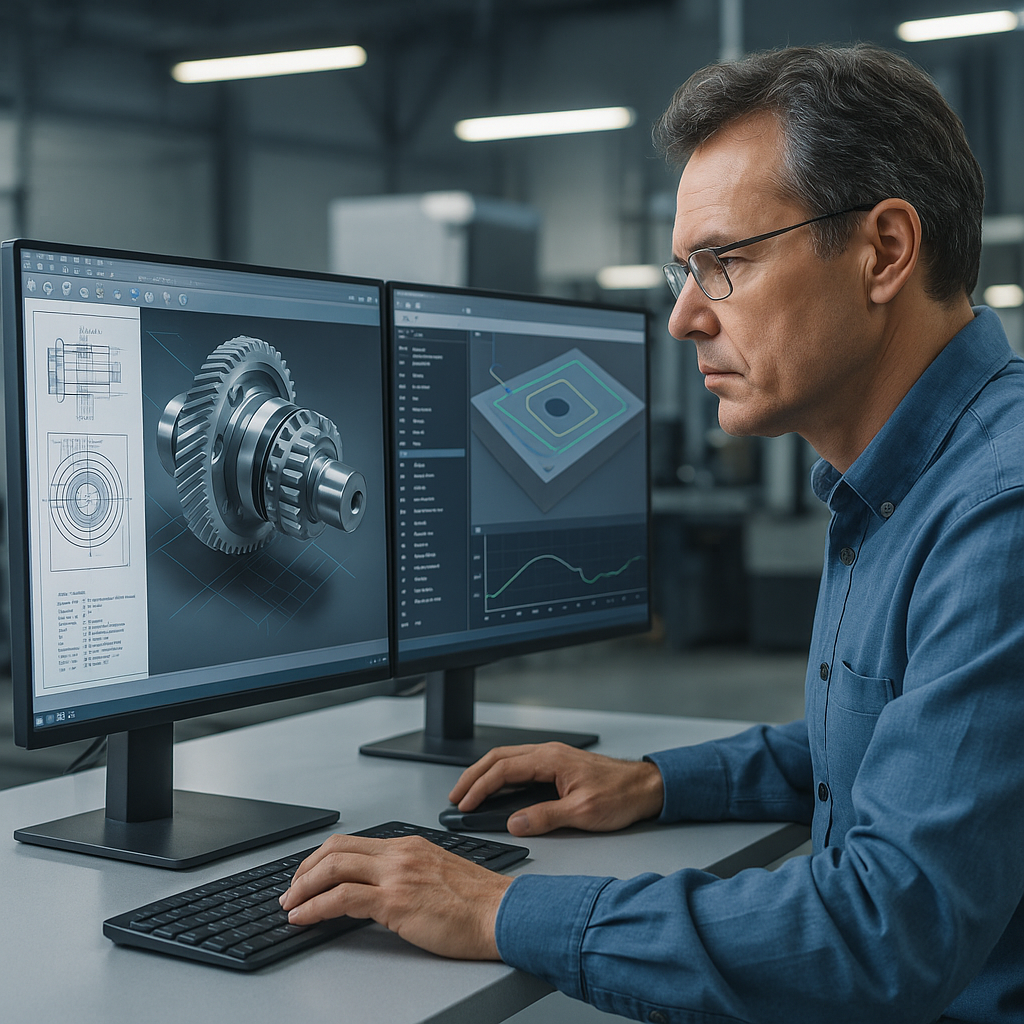
The design-to-manufacturing process can often be marred by integration issues between your CAD (Computer-Aided Design) system and CAM (Computer-Aided Manufacturing) tools. As a Mechanical Design Engineer, ensuring that your designs are accurately transferred from the design phase to the production floor is critical for maintaining efficiency and minimizing errors. When your CAD and CAM systems are not fully compatible or seamlessly integrated, the result can be costly delays, miscommunication between teams, and the need for rework. 

The CAD-CAM Disconnect: A Barrier to Efficiency

Working with advanced CAD software like SolidWorks or Siemens NX offers powerful design capabilities. However, the challenge often arises when it’s time to move from design to manufacturing. Without a smooth integration between CAD and CAM, engineers and production teams are forced to spend time converting files, adjusting data, and ensuring that the design can be interpreted correctly by the CAM system. These extra steps waste valuable time and often introduce errors. 

The Benefits of Seamless CAD-CAM Integration

One of the most effective ways to ensure that your designs translate seamlessly to production is to use software that integrates directly with CAD systems. By allowing for a smooth transfer of data from your design to the CAM system, you eliminate the need for manual conversions and the risk of misinterpretation. This ensures that the design intent is maintained, and no critical details are lost during the transfer. 

bi-directional integration between CAD and CAM tools allows changes made in the design phase to be automatically updated in the CAM system, reducing the likelihood of errors due to outdated files. Furthermore, real-time updates between the two systems allow for faster iterations and smoother communication between design and production teams. 

Efficiency and Accuracy, Every Step of the Way

By ensuring that your CAD and CAM systems work together seamlessly, you can drastically reduce programming times, improve collaboration, and produce parts more efficiently. The ability to automatically update toolpaths and adjust machine parameters based on your design changes means that the manufacturing process becomes smoother, faster, and more accurate. 

With the right tools, you can design parts that not only push technological boundaries but are also practical and ready for efficient, accurate production. 

Want to learn how to streamline your design-to-production process and create parts that are ready for manufacturing? Book a meeting with our experts today to explore how the right tools can help you bring your complex designs to life with ease. Or, download our ebook to discover the future of integrated design and manufacturing. 

DOWNLOAD EBOOK

Bridging Design and Manufacturing: A Guide to Accelerating Innovation and Reducing Time-to-Market with HyperMill

GET IN TOUCH

Do you want more specific information or guidance from our experts? Get in touch with us by clicking the button.

READ MORE ABOUT hyperMILL

Interested in more information about hyperMILL? Visit our Hypermill landingpage and read about features and other topics.